About Pneumatic Air Regulator
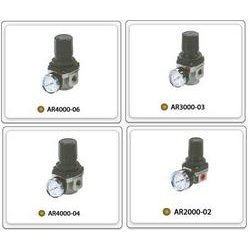
Air Regulator
We offer best quality of Air Regulator, available in wide ranges.
Pneumatic pressure controls fall in the category of pressure reducing valves, commonly referred to as air line regulators. It is also essential, once a system pressure has been selected to perform a task, that air be supplied at constant pressure to the actuator, regardless of variations in flow and upstream pressure. Thus, it is important to add to a pneumatic system a pressure regulator that:
- Supplies air at constant pressure regardless of flow variation or upstream pressure
- Helps operate the system more economically by minimizing the amount of pressurized air that is wasted. (This happens when the system operates at pressures higher than needed for the job)
- Helps promote safety by operating the actuator at reduced pressure
- Extends component life because operating at higher-than-recommended pressures increases wear rate and reduces equipment life produces readily controlled variable air pressures where needed, and increases operating efficiency.
- Work Temperature: Normal Temperature
- Color: Black
- Size: Small
Reliable Pressure Regulation for Industrial ApplicationsThis pneumatic air regulator is specifically built to provide accurate and consistent pressure control, ensuring equipment runs efficiently and safely. Its manual knob allows for straightforward outlet pressure adjustments between 0.5 and 8 bar, catering to various machinery and system requirements. The integrated pressure gauge simplifies monitoring, while its panel or inline mounting options support flexible installation in workshop or production settings.
Durable Construction for Demanding EnvironmentsFabricated from stainless steel and an aluminum alloy body, this regulator withstands harsh industrial conditions while maintaining performance and longevity. Its compact design (500-700 grams) and corrosion-resistant materials minimize maintenance downtime. With a diaphragm-type internal structure and customized valve, the regulator assures reliable operation even under fluctuating loads and temperatures.
FAQ's of Pneumatic Air Regulator:
Q: How do I adjust the outlet pressure on this pneumatic air regulator?
A: To adjust the outlet pressure, simply turn the manual knob located on the regulator. The integrated pressure gauge will display the current pressure, allowing you to set it anywhere between 0.5 and 8 bar, depending on your application's needs.
Q: What type of applications is this regulator suitable for?
A: This pneumatic air regulator is ideal for industrial compressed air systems, automation lines, and pneumatic machinery that require precise pressure regulation. It is suitable for use in environments where filtered compressed air at adjustable flow rates is needed.
Q: When should I mount the regulator on a panel versus inline?
A: Panel mounting is advantageous for centralized or easily accessible control panels, providing a visual and operational point for adjustments. Inline mounting is recommended when installation space is limited, or when the regulator needs to be close to the application point within the air line.
Q: Where is this pneumatic air regulator manufactured and supplied from?
A: This product is manufactured, exported, and supplied from India by a recognized manufacturer and exporter specializing in industrial pneumatic equipment.
Q: What is the process for installing this regulator in an air system?
A: Begin by ensuring the compressed air is filtered and clean. Attach the regulator to your system using the 1/4" BSP port. Depending on your setup, choose either panel or inline mounting. Once installed, use the manual knob to set the desired pressure and verify it with the integrated gauge.
Q: What are the benefits of using a diaphragm-type regulator with customizable valve structures?
A: Diaphragm-type regulators provide stable pressure output and quick response to pressure fluctuations, ensuring consistent performance. The customizable valve structure offers optimal compatibility for different system requirements and helps maintain low air consumption, promoting energy efficiency.


 Send Inquiry



 Send Inquiry