About Safety Valves
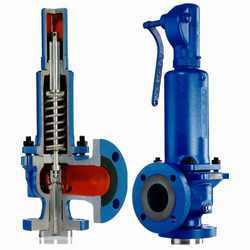
Owing to the finest quality of raw material used in their construction, our safety valves following opening, acquires the degree of lift necessary for optimum discharge rate within a pressure rise of not more than 10%, thus protecting the equipment from dangerous high pressure.
Manufactured in compliance with industry norms and standards, these valves efficiently meet the various industrial application requirements.
Specifications:
- Fitting: Thermocouple
- Media: Gas
- Port Size: 1/8" 1/4" 3/8" 1/2"
- Production Capacity: 60000/Year
- Size: 3/4-12"
- Structure: Spring
Precision Engineering for Water ApplicationsOur safety valves are meticulously engineered to regulate water pressure reliably in industrial and commercial installations. With standard sizing and robust construction from cast iron and stainless steel, our valves provide peace of mind by mitigating pressure-related risks. Their blue finish ensures they are easily spotted during inspections and maintenance routines.
Versatility and Durability CombinedSuitable for both industrial and commercial use, these pilot-operated safety valves are manufactured for long-lasting durability with premium materials. Their height range from 101.6 to 304.8 mm makes them compatible with a variety of piping configurations, delivering versatile solutions tailored to your operational requirements.
FAQ's of Safety Valves:
Q: How does a pilot-operated safety valve function in water systems?
A: A pilot-operated safety valve works by using a small pilot valve to control the main valve, ensuring precise pressure regulation and quick response in water applications, which provides enhanced safety in both industrial and commercial systems.
Q: What are the key benefits of using cast iron and stainless steel safety valves?
A: Cast iron and stainless steel offer exceptional strength, resistance to corrosion, and longevity, making them ideal for strenuous industrial environments. These materials ensure the valve operates efficiently and reliably over extended periods.
Q: When should I consider installing a safety valve in my water system?
A: Safety valves should be installed whenever a water system operates under pressure that could exceed design limits, particularly in industrial or commercial applications where equipment, personnel, and processes depend on safe operating parameters.
Q: Where are these safety valves typically utilized?
A: These valves are predominantly used in industrial and commercial settings in India and across export markets, where water system safety and pressure control are critical requirements.
Q: What is the process for maintaining a pilot-operated safety valve?
A: Regular maintenance includes visual inspections for corrosion or leakage, ensuring the pilot valve is unobstructed, and testing the set pressure functionality. It is standard practice in industrial and commercial facilities to adhere to scheduled maintenance to guarantee ongoing performance.
Q: How does the standard sizing benefit installation and replacement?
A: Standard sizing ensures compatibility with widely used piping systems, simplifying installation and enabling straightforward replacement without the need for extensive modifications or custom fittings.
Q: What makes pilot-operated safety valves advantageous over conventional valves?
A: Pilot-operated designs provide more accurate pressure control and higher capacity, which is especially beneficial in protecting complex water systems from overpressure scenarios common in industrial and commercial operations.


 Send Inquiry



 Send Inquiry