About Solenoid Valves
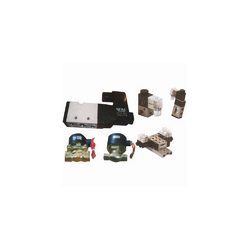
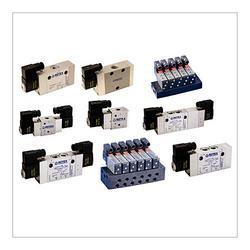
Being a quality-oriented enterprise of this domain, we ensure to offer optimum quality Solenoid Valves. These valves are highly demanded for controlling the flow of different types of gases and fluids as per the need of the clients. The offered valves are manufactured using the finest quality components in adherence with predefined industry norms. Our offered Solenoid Valves are available in different specifications to meet the exact requirements of the clients.
Features:
-
Compact design
- Rugged construction
- Optimal strength
- Easy operations
Additional details:
A solenoid valve is an electromechanical device used for controlling liquid or gas flow. The solenoid valves are controlled by electrical current, which is run through a coil. When the coil is energized, a magnetic field is created, causing a plunger inside the coil to move. Depending on the design of the valve, the plunger will either open or close the valve. When electrical current is removed from the coil, the valve will return to its de-energized state.
In direct-acting solenoid valves, the plunger directly opens and closes an orifice inside the valve. In pilot-operated valves (also called the servo-type), the plunger opens and closes a pilot orifice. The inletline pressure, which is led through the pilot orifice, opens and closes the valve seal.
The most common solenoid valve has two ports: an inlet port and an outlet port. Advanced desigs may have three or more ports. Some designs utilize a manifold-type design.
Solenoid valves make automation of fluid and gas control possible. Modern solenoid valves offer fast operation, high reliability, long service life, and compact design.
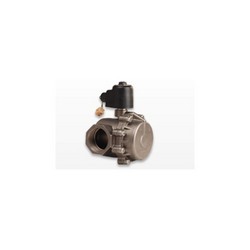
Robust and Reliable ConstructionBuilt with premium electroplated brass and a stainless steel armature, this solenoid valve guarantees durability and longevity, even under demanding conditions. It's designed for a minimum of one million operational cycles and supports continuous use. The NBR seal ensures tight shutoff and excellent compatibility with a variety of media, making it suitable for multiple industrial applications.
Flexible Mounting and Application VersatilityThe valve's mounting flexibility means it can be installed in any orientation, preferably with the coil upright, to suit your system's requirements. Its wide pressure and temperature ranges, coupled with a threaded BSP female connection, make it compatible with water, air, gases, and light oils. Whether used in process automation, fluid distribution, or control panels, its versatility delivers consistent performance.
FAQ's of Solenoid Valves:
Q: How should I install the solenoid valve for optimal performance?
A: For best results, install the solenoid valve with the coil positioned vertically upwards, although it can function in any orientation. Ensure threaded BSP connections are securely tightened and that the valve is properly supported to avoid strain on the port connections.
Q: What types of media can this solenoid valve control?
A: This solenoid valve is suitable for controlling water, air, non-corrosive gases, and light oil. The NBR seal material offers reliable sealing performance and compatibility with these media at temperatures ranging from -5C up to 80C.
Q: When is maintenance required for the solenoid valve?
A: Routine maintenance is recommended based on the operating environment and media characteristics. However, thanks to its robust structure and over one million-cycle lifespan, frequent maintenance is typically unnecessary unless you observe decreased performance, leakage, or sluggish response.
Q: Where can this solenoid valve be used?
A: With its IP65 protection rating, this valve is suitable for both indoor and outdoor installations in industrial environments. Common applications include water treatment, air and gas flow control, oil dispensing systems, and general automation processes.
Q: What is the process for selecting the right solenoid valve for my needs?
A: Start by matching your system's operating pressure, media, temperature, and flow requirements with the valve's specifications. Ensure compatibility with the fluid type, connection size (1/2-inch BSP), and electrical requirements (220V AC, 50Hz). Consult the supplier for specialized needs or customizations.
Q: How does the solenoid valve benefit industrial operations?
A: Its fast response, continuous duty cycle, and robust construction provide reliable automation, reduce downtime, and enhance process efficiency. The valve's longevity and minimal maintenance translate into lower lifecycle costs and uninterrupted operation.


 Send Inquiry



 Send Inquiry